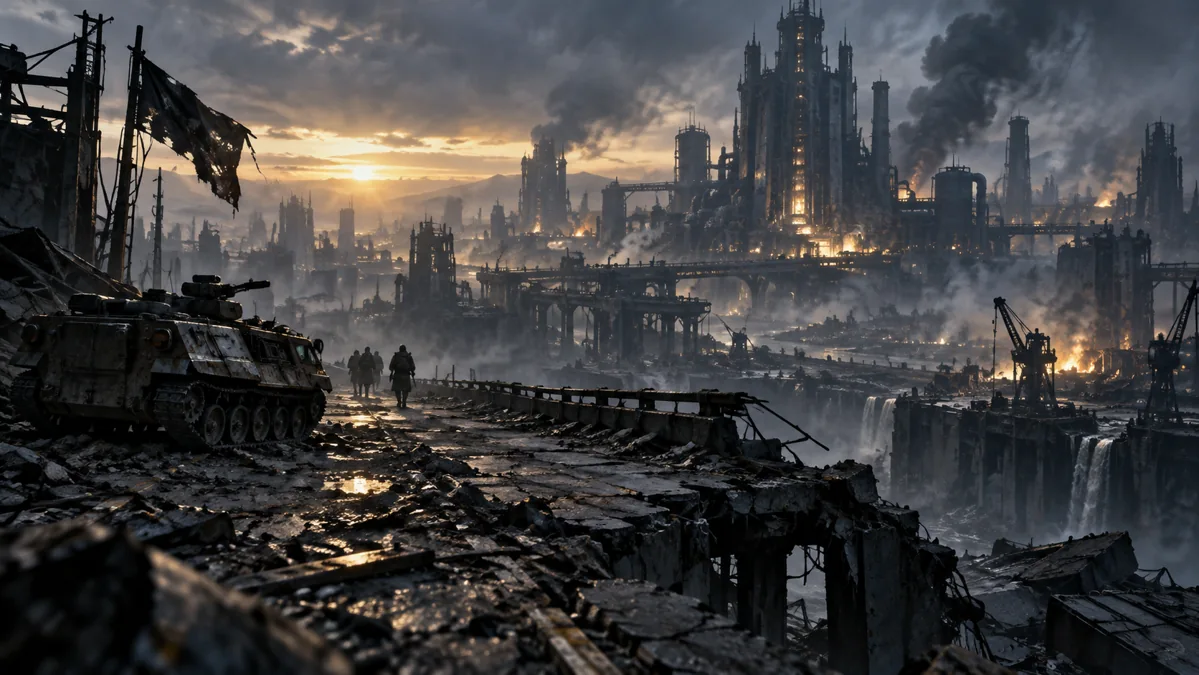
Remus Ventanus's war begins among broken explanations. The world around him is suddenly dangerous, central communications are unreliable, and weapons associated with brother Legionaries are being used against his men. He must protect people and make decisions before a complete strategic picture becomes available. Know No Fear follows the recovery of command at this scale through the work of a captain rebuilding a fighting force from disruption.
Recognition under fire
Ventanus and Kiuz Selaton initially encounter the difficulty of accepting deliberate hostility from the Word Bearers. An apparent error becomes an attack that cannot be explained away. That recognition is a turning point: a commander cannot choose useful objectives while still assigning the enemy the role of an ally.
The early effort includes saving and moving civilians as well as finding surviving soldiers. Damage has fractured the systems that ordinarily distinguish battlefield support, civilian movement, and command communications. Ventanus's responsibility is therefore wider than simply locating a formation and ordering it forward.
An improvised network
The survivors' connection with Mechanicum personnel gives them something precious: limited secure communications. Arook's military backup system cannot restore orbital links, but it can reconnect local units. Magos Tawren brings knowledge of the data systems that the Word Bearers have compromised. These resources turn scattered survival into the possibility of coordinated action.
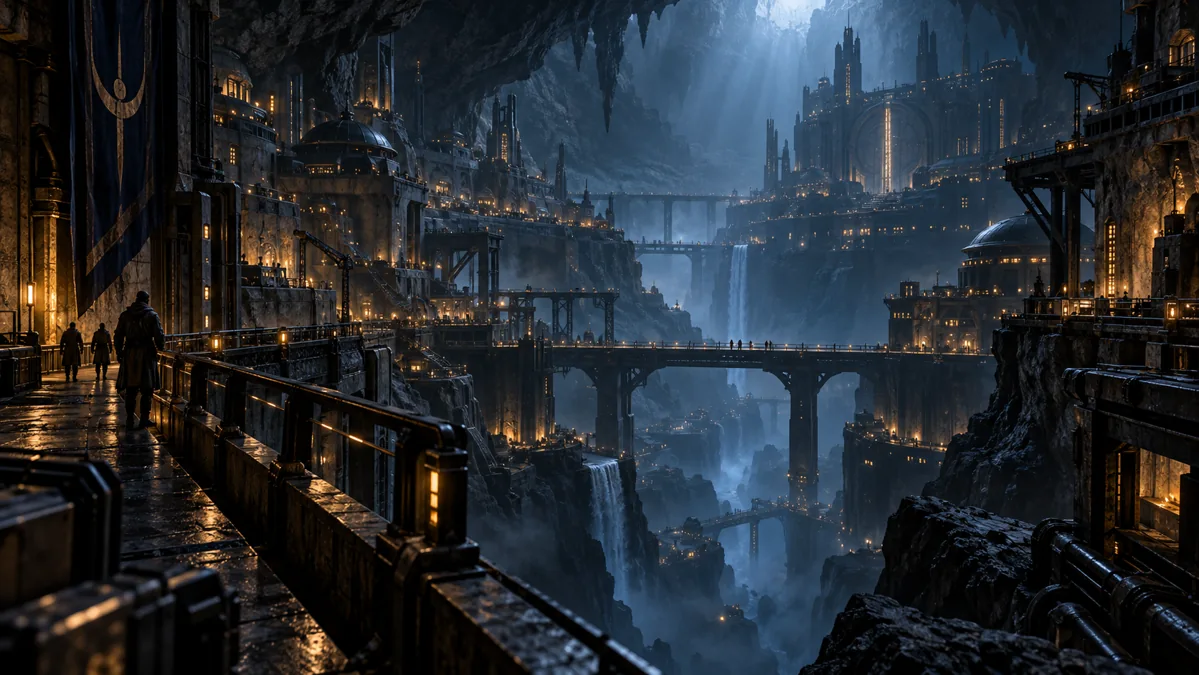
The underground routes linking the city and palace make movement possible under conditions that render open ground increasingly dangerous. Their existence is practical knowledge, not a theatrical escape route introduced solely for the battle. Ventanus's force can act because people familiar with the world and its systems contribute what they know.
Holding a purpose instead of chasing anger
The fighting group has ample reason to seek revenge. Lyros Sydance gives that anger a powerful voice. Ventanus must nevertheless distinguish an emotionally satisfying charge from an action capable of changing the situation. The novel does not oppose courage to reason. It asks whether men willing to die can also accept the discipline required to make their survival or sacrifice useful.
The defence at Leptius Numinus gives that discipline a concrete form. Positions, ammunition, and timing matter because Tawren's technical effort needs protection. Holding ground is not an abstract proof of honour. It buys the opportunity to interfere with a system whose hostile use threatens everyone on the planet.
The battle over control
The later move toward the guildhall concentrates the surface struggle around an objective tied to the weapons network. The enemy also understands the significance of that point and brings overwhelming force against it. Titans, Legion warriors, and the Gal Vorbak make the threat more than a contest between two intact companies.
Ventanus is wounded in the close fighting. His continued participation does not make the odds favourable. Tawren can calculate a remaining time to annihilation even as the defenders inflict damage. The novel holds both truths together: the resistance is real, and its immediate destruction may still be imminent.
When enemy control is interrupted, Tawren acts through the opening. The change in the weapons system provides a result beyond what the surface fighters alone could achieve. This is the ground war's clearest answer to purposeless fury. Their defence matters because it preserves the people and equipment able to use that moment.
A victory measured in endurance
The result does not restore Calth. The survivors must retreat into the arcologies as the surface becomes uninhabitable. Ventanus orders the withdrawal as a necessity, while acknowledging that the enemy will also go below. Survival and combat remain joined.
His final commitment to continue fighting makes the ground war a beginning as well as an ending. The Underworld War lies ahead, and the epilogue later frames these years through memory. This dossier keeps the emphasis on what Know No Fear actually shows: local leadership, technical partnership, the refusal of wasteful action, and the hard transition from trying to save a battlefield to sustaining resistance inside a damaged world.
Further reading
Read the original sources
Dan Abnett, Know No Fear: The Battle of Calth.
Original summary and analysis. No book text or artwork is reproduced.