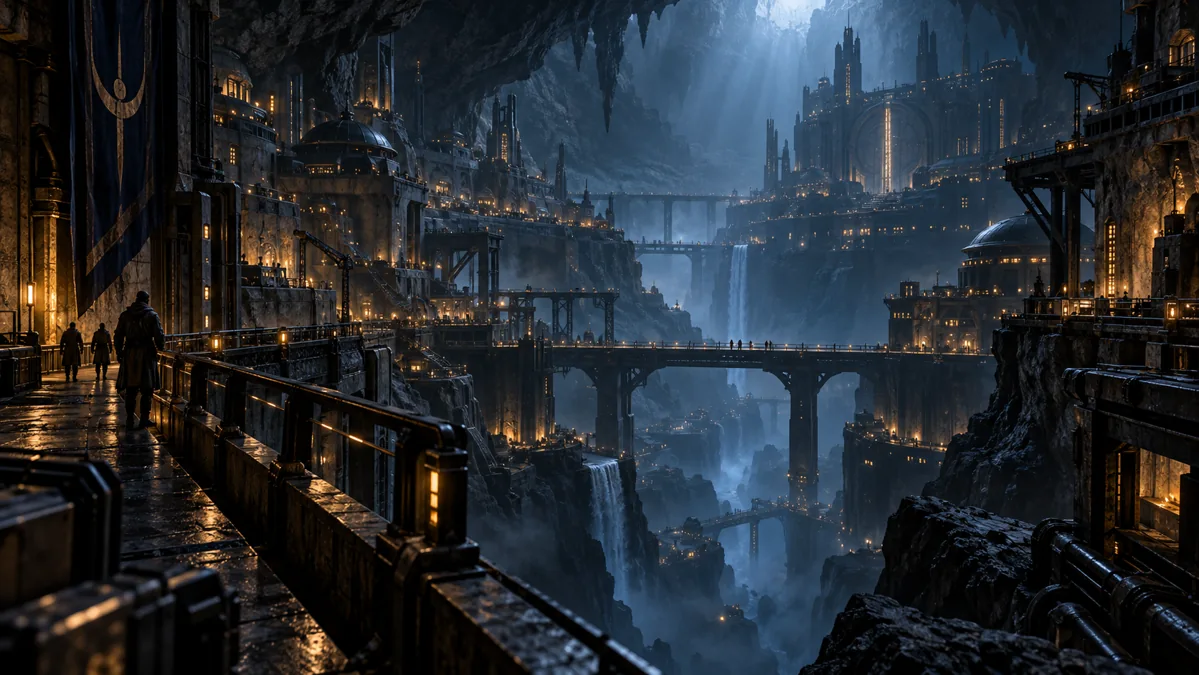
The closing movement of Know No Fear takes the survivors from the damaged surface into the arcologies. This is not a return to peace. The same enemy that has made the surface untenable will also seek shelter below. Remus Ventanus's answer is to continue fighting, now within the spaces that allow people to remain alive.
Refuge before catastrophe
The underground network belongs to Calth before the betrayal. The novel describes natural caverns being developed as habitats and used as shelters during heightened activity from the local star. Particular branches connect important surface sites. These existing uses make the later withdrawal credible: the survivors are adapting a known protective environment to a catastrophe beyond its usual role.
The network also matters during the battle. It provides movement between city and palace under conditions that make open routes dangerous. Surface and subterranean spaces are therefore connected across the campaign, rather than separated into a battle above and an unrelated sequel below.
An order formed by necessity
By the end, the surface can no longer support the survivors safely. Ventanus makes the retreat to the arcologies an order, not a matter of preference. Tawren anticipates how unpleasant the caves will be, while Selaton answers through the more immediate danger above. The exchange keeps survival practical. A refuge can be difficult, crowded, and uncertain while still being the necessary option.
This is not an uncomplicated rescue by the departing fleet. Guilliman must leave with the remaining ships as the Ruinstorm rises, and many people remain beyond immediate extraction. His conversation with Thiel records the hope of return without establishing a reliable date. The survivors' situation must therefore be understood on its own terms, rather than as a brief delay before guaranteed relief.
Resistance follows the people
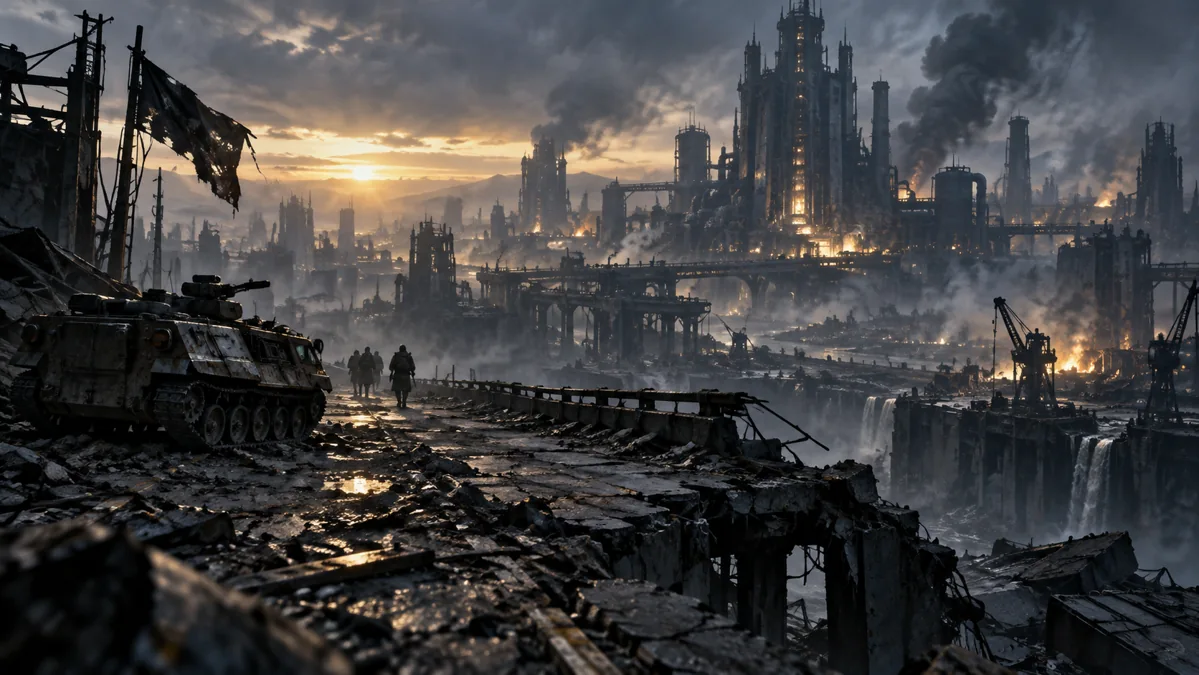
Tawren points out that enemy forces will go underground too. Ventanus accepts the implication. Shelter does not remove the war; it changes its setting and its priorities. The task becomes preserving organised resistance and the people dependent on it inside a damaged planetary environment.
The choice continues the ground campaign's emphasis on useful action. Earlier, Ventanus had to resist attacks driven solely by fury. Now, persistence requires accepting a withdrawal without mistaking it for the abandonment of the fight. Remaining above for the sake of appearance would not preserve Calth's people. Going below preserves the possibility that there will still be people and fighters to act tomorrow.
The beginning, not a complete history
The novel explicitly points toward the Underworld War. Its epilogue looks back across years from a later Ventanus, allowing the reader to feel that the battle's aftermath has become a long burden. That framing supports the claim that underground resistance continues. It does not supply this collection with a complete chronology of every later engagement.
The archive therefore stops its detailed sequence at the transition. The source is enough to explain why the war moves below, who takes responsibility for that decision, and how the memory of Calth persists. Filling the years with additional campaigns from model memory would obscure the difference between the supplied evidence and a wider setting.
What endurance means here
The arcologies are a useful corrective to endings measured only through destroyed ships or surviving commanders. People remain in the world that has been attacked. Their continued existence requires routes, technical systems, shelter, discipline, and cooperation. The work of Tawren, Selaton, and Ventanus remains relevant because those practical relationships must continue.
This dossier concludes the Calth reading path with survival rather than restoration. The world before the betrayal cannot be recovered by moving into a cavern. What can be carried forward is a community's capacity to endure and a fighting force's refusal to let destruction define its final action. Know No Fear leaves that commitment as an ongoing obligation, not a claim that the price of the battle has been paid in full.
Further reading
Read the original sources
Dan Abnett, Know No Fear: The Battle of Calth.
Original summary and analysis. No book text or artwork is reproduced.