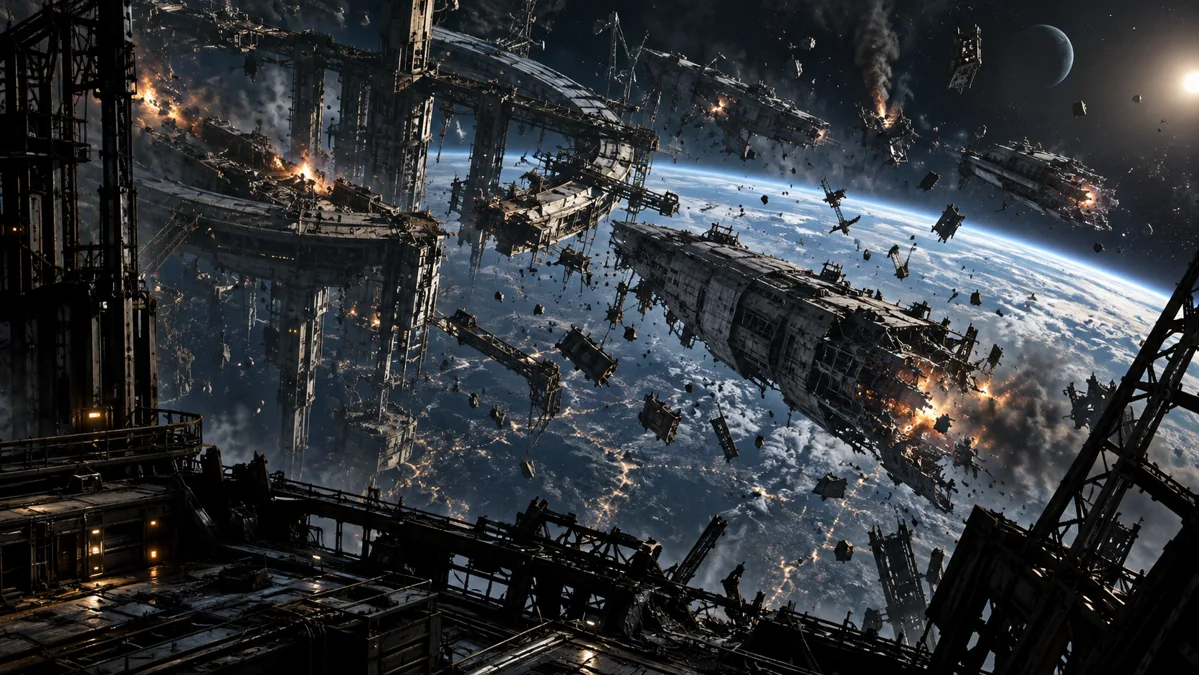
The beginning of Calth's destruction turns a system's connections into routes of harm. An orbital tender accelerates where it should be manoeuvring safely. The space around a mustering world becomes a field of collision, fire, and deliberate attack. On the ground, light and shock arrive before the people experiencing them can identify what has happened. Know No Fear presents catastrophe as both an event and a failure of the usual means of explaining events.
The Campanile as a projectile
The Campanile has already been captured. When its main drives fire, the vessel ceases to perform the role expected of a tender and becomes an enormous weapon. The attack uses an existing object inside the legitimate orbital environment. Observers do not have the time or context that a distant approaching enemy might provide.
The resulting disaster cannot be understood as a single accidental impact. The collision is part of a coordinated opening that includes Word Bearer fire and attacks across the assembled forces. The distinction matters because it changes what a defender must do next. An accident calls for rescue and restoration. A coordinated attack requires recognising who is causing the destruction and denying them further access.
Connected strength, connected vulnerability
The concentration of vessels and infrastructure around Calth should make a great deployment possible. In the opening assault, concentration magnifies loss. The orbital environment is crowded with valuable assets, and the enemy is already close enough to act inside it. Damage to ships and docks intersects with the loss of communications and central command.
The planetary weapons system extends the attack's reach. Kor Phaeron's forces use the grid against the system it should defend. Battleships and other orbital assets are not merely caught in uncontrolled debris; they become targets of an organised hostile use of infrastructure. The attacker's access creates a weapon out of the defender's own arrangement.
Catastrophe at human speed
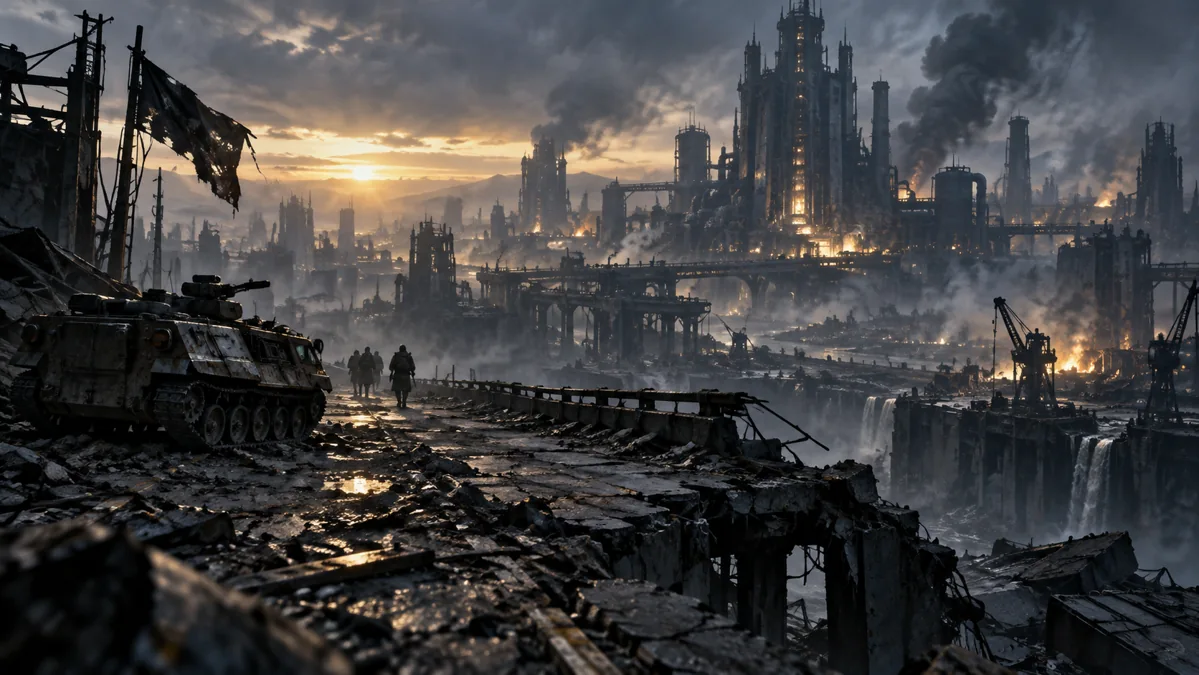
Abnett cuts between the system scale and the limits of individual perception. A soldier sees silhouettes against a sky made suddenly bright. A wounded civilian cannot immediately understand why a Legionary has dragged or struck her while trying to save her. Ventanus has to act before he can give a complete account of the threat.
These scenes prevent scale from becoming abstraction. The speed of the attack forces people to decide with damaged information. Their confusion is not a lack of courage. It is a consequence of an operation that has destroyed the normal relationship between warning, understanding, and response.
The command gap
The flagship's damage leaves survivors without a reliable chain of command. Thiel begins assembling one. Gage, wounded and recovering, recognises the value of that initiative. The episode shows that command is an active relationship among surviving people, not simply a title that remains effective because it exists on a roster.
The first useful order may therefore come from someone whose thinking had been censured before the attack. The catastrophic opening changes the relevance of experience. The defenders need men able to identify a new problem, organise others around it, and update their assumptions while the environment is still breaking apart.
What the opening makes possible and impossible
The Word Bearers gain the initiative and inflict damage that cannot be undone by a later successful counterattack. Yet the opening does not eliminate every capacity to resist. Survivors find one another, repurpose available systems, and move toward achievable objectives. The distinction between catastrophic loss and complete incapacity is one of the novel's central tensions.
The opening belongs beside the dossiers on betrayal and ground recovery. The earlier preparation explains why the blow lands so effectively; the later adaptation explains why some agency survives it. Calth's orbital catastrophe is not simply an image of spectacular wreckage. It is the destruction of the conditions under which an organised world expected to act, followed by the difficult work of building new conditions from what remains.
Further reading
Read the original sources
Dan Abnett, Know No Fear: The Battle of Calth.
Original summary and analysis. No book text or artwork is reproduced.