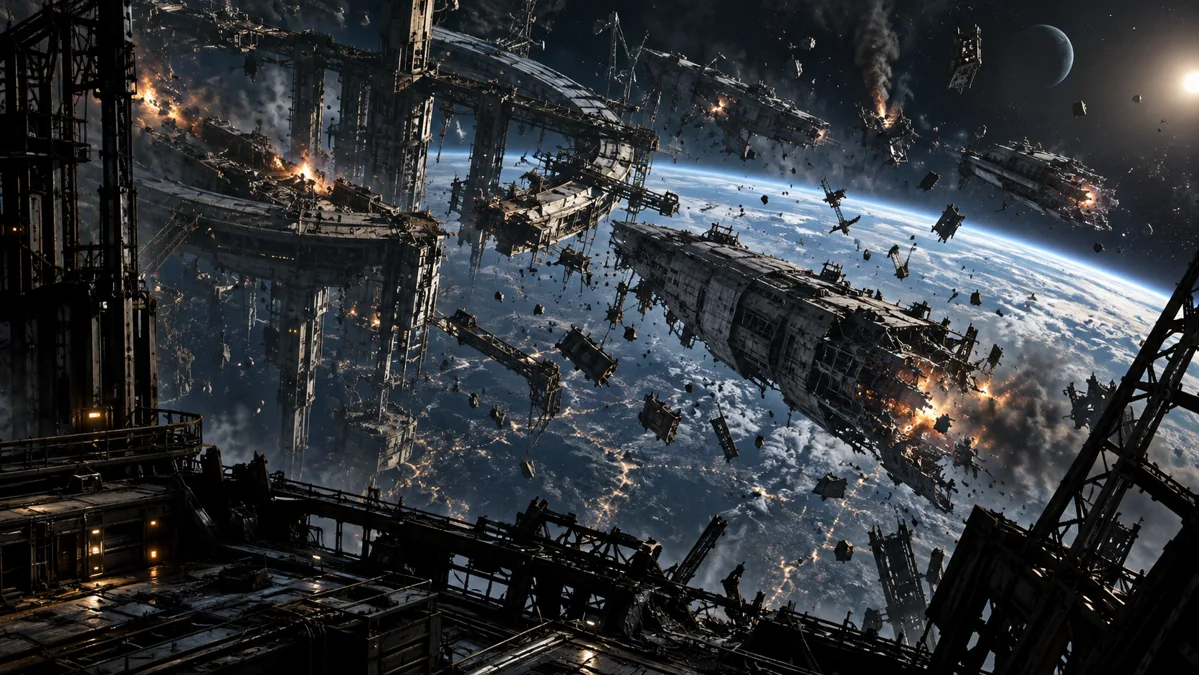
Calth is a battle whose first difficulty is recognising that a battle has begun. The Ultramarines gather with the Word Bearers for an expected joint operation. Military strength is concentrated around a world whose ports, cities, and orbital facilities should support cooperation. Dan Abnett turns those preparations into the conditions of an atrocity: the same proximity that makes a coordinated deployment efficient makes a prepared betrayal devastating.
Know No Fear does not tell this only through commanders. Soldiers, ship crews, civilian officials, and technical personnel experience different fragments of the catastrophe. The mark sequence organises those fragments without making their participants immediately understand them. The reader can see a coordinated attack while individuals still search for an accidental explanation.
The battle before the count
The seizure of the Campanile precedes the public onset of the attack. Its murdered crew establish that the betrayal has already become lethal long before most defenders know they have an enemy. Sorot Tchure's killing of Honorius Luciel and his companions supplies another early point of deliberate violence. The two episodes give Calth both a logistical and a personal prehistory.
The opening phase, TARGET//ACQUISITION, therefore contains the attack's preparation alongside the preparations of its victims. This matters to the novel's use of time. The mark is not a magical boundary dividing peace from war. Different participants cross that boundary at different moments, often without knowing it. Trust has already been converted into access, and access into the ability to kill.
Catastrophe across connected systems
The Campanile becomes a projectile directed through the orbital environment. Its acceleration is not an isolated collision but part of a coordinated assault on infrastructure and command. Ship losses, disrupted communications, and violence on the surface interrupt the relationships on which an organised Legion depends.
The Word Bearers' use of the planetary weapons grid extends the attack beyond battlefield engagements. Assets meant to defend the system become instruments against it. Calth's strength is turned inward. What had supported transit and deployment becomes a means of trapping forces inside a rapidly worsening disaster.
For the defenders, the first response is interpretive as well as physical. Fire from supposed brothers initially appears as an error. The possibility of betrayal has to become an accepted fact before appropriate action can follow. Every moment spent trying to restore the old explanation gives the attacker another advantage.
The recovery of agency
Aeonid Thiel is useful because he has already considered combat between Space Marines. His censured thinking becomes relevant when institutional assumptions collapse. Aboard the damaged flagship, he constructs a command structure where one is missing and learns to confront threats the defenders have not been trained to understand in these terms.
On the ground, Remus Ventanus assembles a fighting group out of broken formations and limited resources. Kiuz Selaton's close support and the expertise of the Mechanicum make that recovery possible. The effort is not a return to the untouched order before the attack. It is a new arrangement built from survivors, local knowledge, secure communications, and attainable objectives.
Magos Tawren's work makes the data conflict a substantive part of the battle. Holding a position matters because it gives technical recovery a chance to succeed. The surface fighting and the struggle over the system's weapons are consequently interdependent. A soldier buying time can matter to an orbital outcome he cannot directly see.
Counterattack without restoration
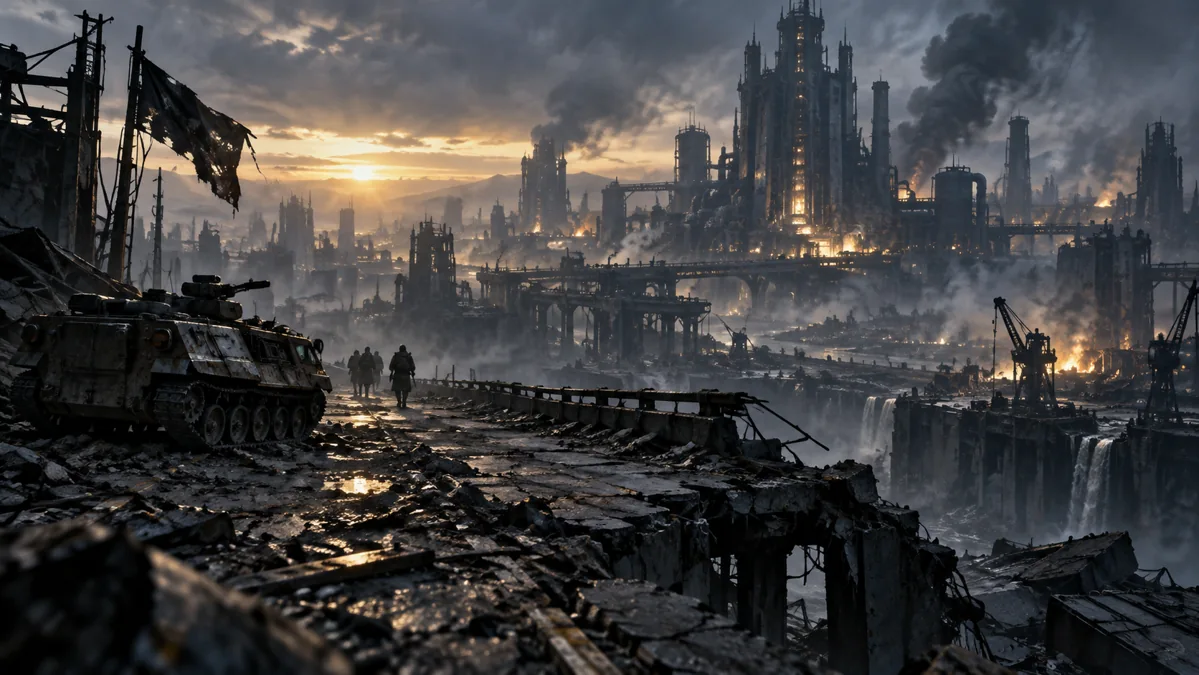
Guilliman's return to action does not erase the strategic damage. He invites the survivors around him to share what they know and build a strategy. The scene contrasts with a simple image of a primarch restoring control by presence alone. He needs other men's experience, including experience formed during the hours in which central command has failed.
The confrontation with Kor Phaeron brings the struggle to a concentrated personal encounter. Kor Phaeron's attempt to turn Guilliman gives the wounded primarch an opening to strike back. Meanwhile, the interruption of enemy control creates an opportunity for Tawren to reclaim the weapons system. Local courage, technical action, and high command intersect, but none can make the planet uninjured.
The meaning of the ending
Erebus regards the rising Ruinstorm as the success of a larger design. The Ultramarines have recovered some capacity to retaliate and survive, while the attack has still achieved consequences beyond the immediate battle. Calth is not securely described by either a triumphant rescue or an unqualified extermination of its defenders.
The survivors left below must move into arcologies as the surface becomes untenable. Ventanus's commitment to continue fighting points toward the Underworld War. The battle ends by changing what endurance means: preserving people and organised resistance inside a damaged world becomes the immediate task. The archive's linked dossiers follow these different scales, from trust betrayed at a table to a storm that obstructs a galaxy, without treating any one of them as the whole event.
Reading by phase and perspective
The timeline follows the novel's progression from acquisition through overwhelming violence, attacks on systems, engagement, and the closing storm. That order should not erase the overlapping perspectives inside it. A shipboard survivor, a ground commander, and a technical specialist can encounter different parts of the same developing crisis. Their accounts become useful to one another only when some form of contact can be rebuilt.
This is why the collection links people and objectives as well as events. Thiel explains an adaptation, Ventanus a recovery of local purpose, and Tawren a technical opening. The publication record identifies the complete work behind those selected interpretations. Reading their dossiers together restores some of the battle's complexity while leaving the full narrative to Abnett's novel.
Further reading
Read the original sources
Dan Abnett, Know No Fear: The Battle of Calth.
Original summary and analysis. No book text or artwork is reproduced.