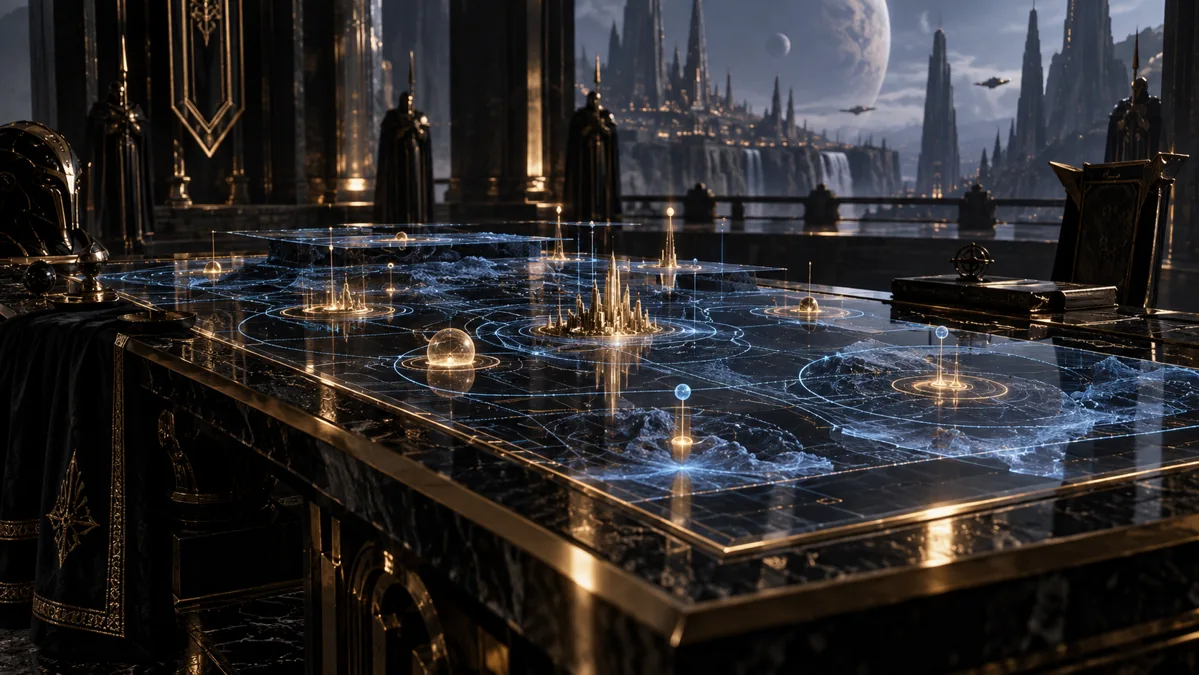
In Lord of Ultramar, the distinction between theoretical and practical is a working method rather than a collection of impressive maxims. A commander proposes an account of the situation, then chooses an action that follows from it. The method promises discipline: an army should understand why it acts, and should be able to connect an immediate decision to a larger purpose.
Annandale makes that promise vulnerable to error. A well-ordered argument can still begin from a mistaken assumption. Worse, a warrior can use the language of reason to justify a preference that he has already decided to pursue. Thoas tests the method both as a means of fighting and as a means of understanding human history.
Assumptions before actions
Guilliman's initial assessment joins the military target to the human ruins. The orks must be defeated, while the historical remains should be preserved for those who will settle the world. The practical follows from this theoretical: avoid a solution that annihilates the environment and destroys the possibility of recovery.
Hierax's proposal gives the same situation a different emphasis. If the central problem is the largest infestation yet encountered in the campaign, the Destroyers offer an efficient conclusion. The argument becomes a dispute about what counts as success. Destruction of the enemy is measurable in the present; the value of the recovered world extends into a future that cannot yet be inspected.
A method shared by disputing men
The language of theoretical and practical does not belong only to Guilliman. His officers invoke it, quote his writings, and test proposals through it. Iasus can remind the primarch that the unprecedented requires adaptability. Gage can turn a familiar principle into a pointed question about command. The method allows conversation across ranks, even when the substance of that conversation is uncomfortable.
Sirras exposes its less reassuring possibility. He frames a faster extermination strategy in the expected terms, but his impatience with Iasus's refusal develops into disregard for orders. A doctrine that values adaptation does not automatically distinguish useful initiative from self-serving defiance. That distinction depends on judgment, coordination, and willingness to recognise the consequences of one's own conduct.
Changing the model under pressure
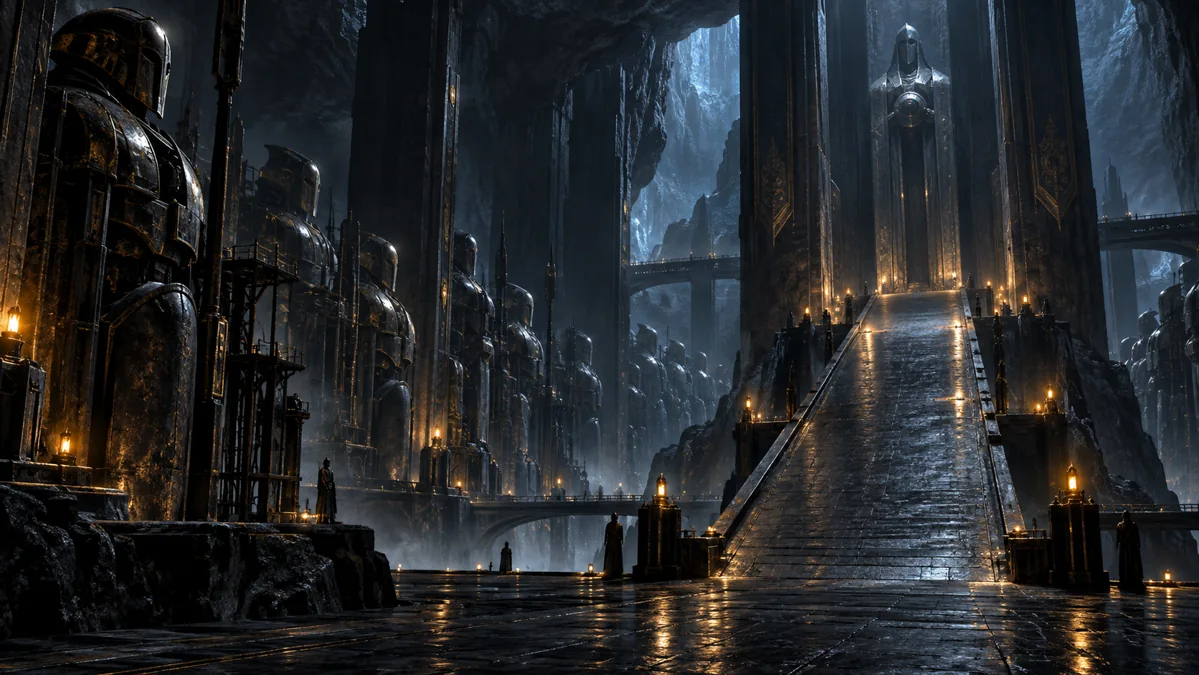
As the subterranean installation is exposed, the army has to revise its understanding of the terrain. An operation organised around surface structures becomes a campaign through a concealed military network. Hierax's expertise helps identify the possibility of a weapons cache. Guilliman accepts a Destroyer deployment that his opening position would have resisted.
This is an important instance of revision. Consistency does not require repeating an earlier order after its factual basis changes. Nor does revision prove that every earlier restriction was foolish. A tool rejected for indiscriminate devastation may become appropriate for a more specific task. The practical must respond to the actual problem, with enough precision to avoid creating a worse one.
Guilliman's fighting around the ancient weapons expresses that principle at the scale of an individual movement. He cannot simply apply maximum force. The ordnance changes which weapon he can safely use and how he must strike. Reason appears as restraint within violence, not as an exemption from its danger.
When analysis becomes judgment
Erasure shifts the method from tactics to history. Evidence of internal warfare overturns Guilliman's imagined account of the ruins. He changes his conclusion about what should be preserved, but the ending complicates that apparent success. Gage's comparison between Thoas's militarisation and the Imperium's commitments is not resolved by defeating the orks.
The theoretical has been revised, yet the revised account may still exclude an unwelcome implication. Guilliman's final sense of blindness matters because it denies the reader a simple celebration of rational mastery. The method requires more than being clever enough to infer an enemy's position. It requires noticing what one's own ambitions make difficult to see.
Reading the method across the collection
Know No Fear offers a related test through Aeonid Thiel. His willingness to consider combat between Space Marines gives him a useful framework when an institution's supposedly impossible scenario becomes real. The two novels should not be collapsed into a single lesson, but together they make a productive comparison: preparation depends on assumptions, and survival may depend on admitting that those assumptions have failed. Reason works best here as a discipline of revision, not a guarantee against surprise.
Further reading
Read the original sources
David Annandale, Roboute Guilliman: Lord of Ultramar.
Dan Abnett, Know No Fear: The Battle of Calth.
Original summary and analysis. No book text or artwork is reproduced.