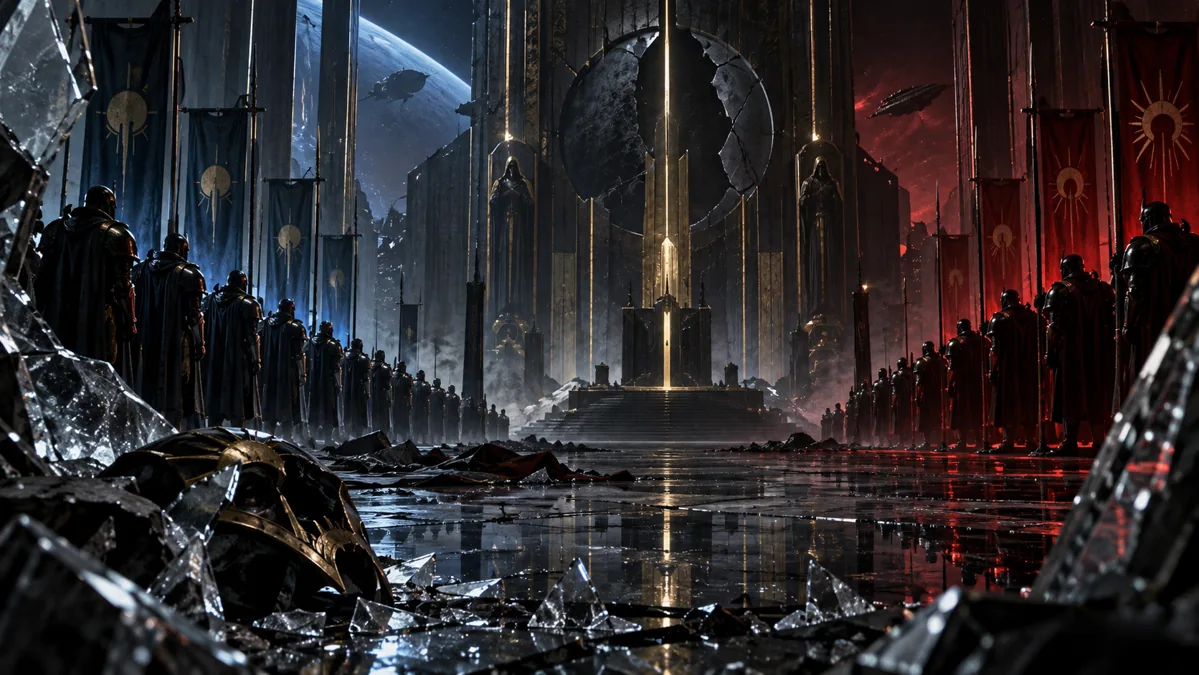
The confrontation between Roboute Guilliman and Kor Phaeron concentrates the battle's competing purposes into one damaged chamber. Guilliman is trying to wound the enemy and recover agency from catastrophe. Kor Phaeron sees the chance for a personal achievement beyond the destruction already inflicted on Calth. The fight matters not only because a primarch is in danger, but because the attacker's ambition changes how he uses his advantage.
An enemy inside the system
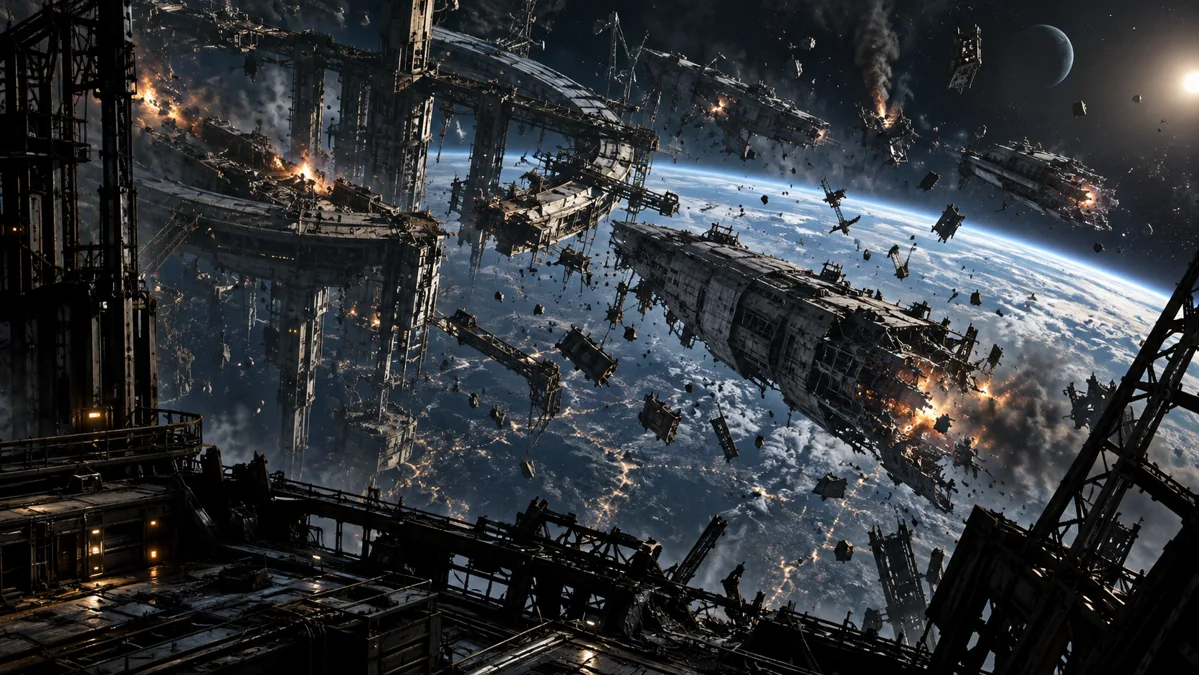
Kor Phaeron is part of the leadership directing the betrayal. His barge contributes to the opening orbital destruction, and his forces operate the captured weapons grid. The infrastructure that should protect Calth becomes an instrument of the attack. His role connects direct military action to a wider assault on the system's ability to function.
Guilliman's approach to the confrontation is formed by the recovery aboard the flagship and by knowledge contributed by survivors such as Thiel. He is not entering an ordinary duel at the height of an undamaged command structure. The conditions are improvised, costly, and uncertain. He knows that survival itself is in doubt.
Force that ordinary readiness cannot answer
Kor Phaeron strikes Guilliman with destructive warp power. The primarch is thrown back and badly shaken. The scene prevents physical superiority from settling the outcome immediately. Whatever confidence Guilliman can bring from his strength and training, the opponent's means of attack create a severe disadvantage.
Thiel and the accompanying warriors cannot simply reach him. They are engaged against an enemy elite and lose men in the effort to break through. Their distance creates the opening in which Kor Phaeron can decide what to do with a wounded primarch. The confrontation is therefore linked to the surrounding squad battle, not isolated from it by the importance of its two principal figures.
The ambition to turn
Kor Phaeron considers killing Guilliman, but the possibility of corrupting him is more attractive. He brings the athame into the encounter and imagines achieving a transformation comparable to the turning of the Warmaster. His choice is important because it delays a straightforward attempt to finish the opponent who is already at his mercy.
The archive should not turn this into a universal claim that every enemy fails through vanity. The specific evidence is sharper. Kor Phaeron's desire for a personally distinguished result creates a moment of proximity and exposure. His interpretation of the opportunity is shaped by the value he assigns to corrupting a great opponent himself.
Guilliman's answer
Guilliman uses the opening to strike back with devastating physical force, tearing out Kor Phaeron's primary heart. The injury does not justify recording Kor Phaeron as dead. The later scene shows him carried away by surviving Word Bearers, still alive. Tchure also escapes after being severely injured by Thiel. The narrative gives the defenders a violent recovery without removing these antagonists from its account by assumption.
The change in the confrontation coincides with the release of control over the weapons system. Tawren sees the altered authorities and sends her killcode through the opening. Guilliman's strike and the technical action matter together, even though they occur at different scales and places. A personal reversal helps make a system-level reversal possible.
What the fight cannot undo
Calth remains ruined, and the Ruinstorm is rising. The defenders gain retaliation and a chance to survive; they do not recover the untouched world. That limit is essential to the encounter's significance. Treating the fight as a complete resolution would erase the strategic result of the attack and the survivors still trapped below.
The scene belongs beside the dossiers on Thiel, Tawren's ground allies, and the Ruinstorm. It is one decisive node in a larger struggle over agency. Guilliman escapes a particular enemy's attempt to define his future, while his Legion must still live with consequences that cannot be defeated by one powerful blow.
Further reading
Read the original sources
Dan Abnett, Know No Fear: The Battle of Calth.
Original summary and analysis. No book text or artwork is reproduced.