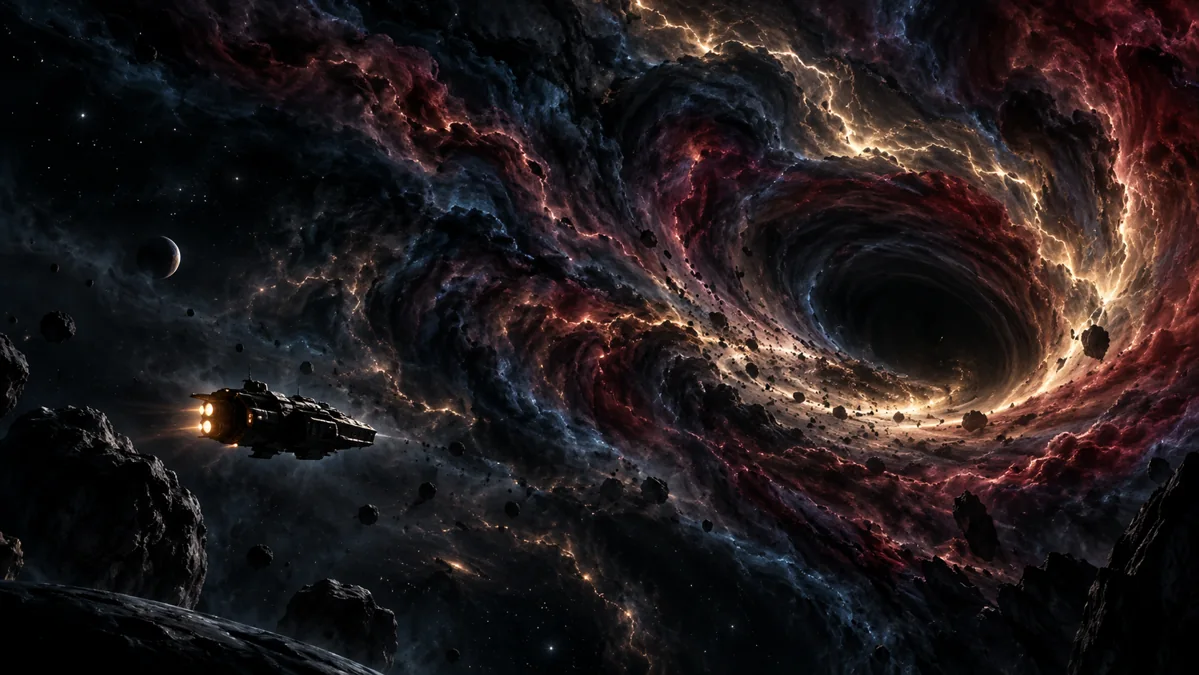
The Ruinstorm is the point at which Know No Fear makes Calth's consequences exceed the battle for one world. The defenders can recover parts of their command, strike back, and survive. Erebus nevertheless sees the completion of a ritual purpose. The storm changes routes, communications, and the possibility of warning others. It makes a local counterattack compatible with a strategic catastrophe.
A different measure of success
Much of the novel follows immediate tasks: escape a collapsing structure, regroup a squad, hold a position, reclaim a weapons system. These tasks are meaningful. Without them, more people would die and fewer defenders could act. Yet the Ruinstorm introduces an enemy purpose that cannot be measured only through those engagements.
Erebus views the attack through that larger purpose. In the concluding phase, he regards the rising warp-storm as the fulfilment of his design. He also recognises that the Ultramarines have salvaged something from the defeat and inflicted a cost. The two observations sit together. The attackers' strategic success is not proof that every victim became passive; the defenders' courage is not proof that the strategic design failed.
Routes and relationships severed
The storm threatens passage across great stretches of the Imperium. Its effect is not just a dangerous patch of space on an otherwise unchanged map. It obstructs communication and chains of contact. Warnings about the betrayal become harder to transmit, and forces that might otherwise respond can be separated from one another.
These consequences are presented through the novel's account of the storm and Erebus's understanding of it. An archive should keep that perspective explicit. It need not invent a detailed map, an exact boundary, or a history of subsequent campaigns to explain why the disruption matters here. The secure point is that the attack is designed to isolate as well as destroy.
A victory the survivors cannot simply take back
Regaining the weapons grid produces a powerful reversal around Calth. Enemy forces are struck by systems they had used for their own purposes. That result changes the local balance and preserves the possibility of survival. It does not disperse the storm or restore the planet's surface.
The separation of scales prevents a falsely reassuring ending. A commander may achieve the best available practical and still inherit a strategic loss. The novel's movement from battlefield action to the rising storm makes that burden visible. It is not a reason to dismiss the counterattack as meaningless; it is a reason to describe exactly what it achieves.
The pressure to leave
Guilliman watches the storm from the Samothrace. The remaining fleet must depart before the system becomes still more dangerous. He understands the need to carry reliable warnings and preserve what can be preserved. The requirement comes at a human cost: many survivors remain on Calth, beyond immediate extraction.
Thiel's conversation with the primarch acknowledges both the hope of return and the uncertain interval before rescue. The novel does not allow the archive to promise a prompt recovery. The departing ships carry survival away from one danger while the people below must enter another form of endurance.
A storm with a human remainder
Cosmic scale can obscure the individuals it affects. Know No Fear avoids that by bringing the storm into the same ending as the arcologies and Ventanus's continuing resistance. The disruption of routes is also a separation between people who can leave and people who cannot.
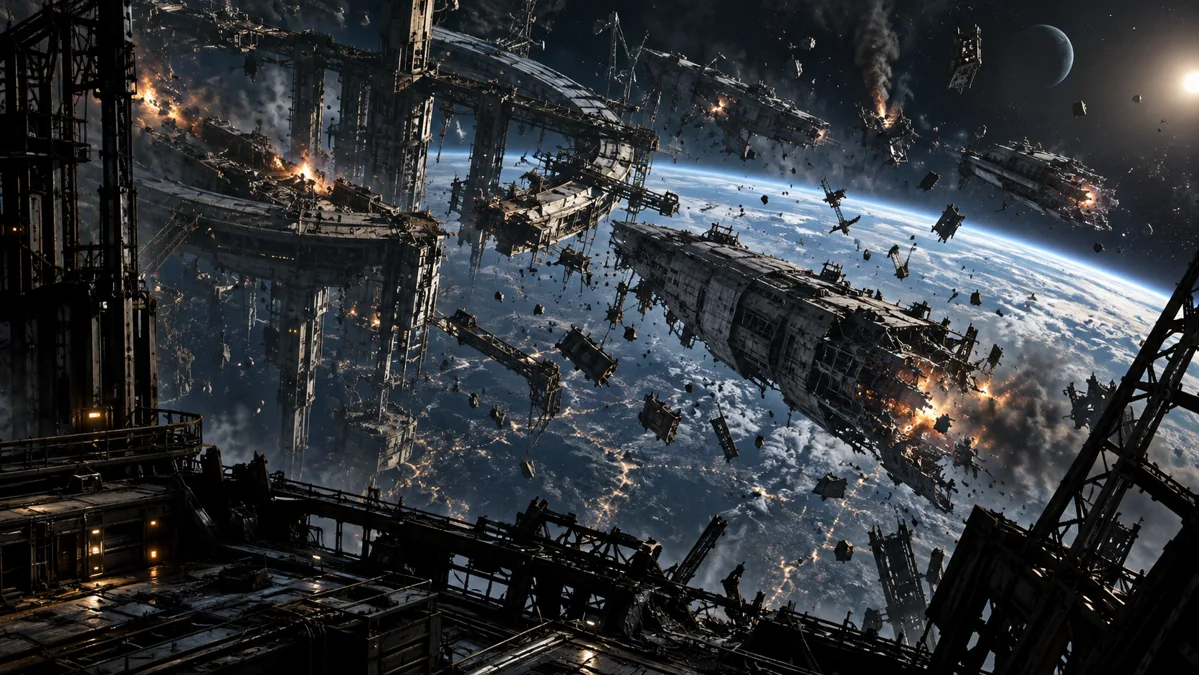
The Ruinstorm dossier therefore links to both the fleet catastrophe and Calth Below. Its atmospheric artwork is an interpretation of obstructed space, not a source for precise physical features. The analysis rests on Abnett's text: the attack wins more than a battlefield, the defenders salvage more than pride, and survival continues under conditions that neither local bravery nor a successful duel can reverse.
Further reading
Read the original sources
Dan Abnett, Know No Fear: The Battle of Calth.
Original summary and analysis. No book text or artwork is reproduced.